Work with Us

Infinite Recovery Project 2025

Recovery

Guidance, Professionals, Recovery

Addiction Is a Response, Not a Disorder

What we call addiction is not an identity, it’s a pattern A pattern that makes sense when you understand what it’s trying to do At the most basic level, every human system is organised around one thing Safety Not as an idea, as a felt experience in the body And when that isn’t there, something has to compensate The nervous system adapts It looks for relief For regulation For something that brings the system back towards balance Sometimes that shows up as control Sometimes as avoidance Sometimes as substances or behaviours that create a moment of ease But notice what happens next, we don’t just describe the pattern, we turn it into identity “I am an addict” And once that happens, something shifts, what was once an adaptive response becomes who you are, and from there, everything starts to organise around fixing that identity This is where things get complicated, because the more we look for what’s wrong, the more we find That’s not opinion, it’s how perception works, attention narrows around threat, around problems, around what needs to be fixed So if your starting point is something is wrong with me, your experience will begin to confirm it Over time, it can feel like truth, but underneath all of that, something hasn’t changed There is still a part of you that is not broken, call it your true self, your nature, your baseline It isn’t something you build, it’s something that is already there, before the patterns The difficulty is not that it’s missing, it’s that it gets covered So the work is often framed as getting somewhere – Recovering – Fixing – Becoming someone new But if you look closely, that creates another trap, destination addiction! The idea that somewhere in the future, you will finally arrive and be okay, but life doesn’t work like that There isn’t a point where everything resolves and stays resolved, there isn’t a version of you that no longer has to meet what arises Life is happening now, and the only place anything can shift is here So what actually changes things? Not more insight on its own and not more labels Not even the removal of the behaviour in isolation What changes things is your capacity to be with what is happening, without needing to escape it Because what the system has been looking for all along is not the substance! It’s safety. – In the body – In connection – In relationship When that begins to return, something else happens The behaviours that once felt necessary start to lose their grip, not because they were forced out, but because they are no longer needed in the same way , There are human beings whose systems adapted in intelligent ways to what they experienced The question is not how to fix them, it’s whether the conditions exist for them to no longer need those adaptations And that doesn’t start somewhere else It starts here

It's Just two People Chasing a Trauma Fix
Guidance, Professionals, Recovery

It’s Just two People Chasing a Trauma Fix!

This is the hardest professional mirror to look into. We call it the Therapeutic Alliance, we frame it as a noble, altruistic connection aimed at healing the client. But when both parties enter the room still seeking a way to feel whole, the relationship stops being a connection and starts being a transaction. It becomes a perfect, high-functioning co-dependence, disguised as therapy.   The Practitioner’s Fix If you are still wearing your Expert Mask (your professional identity built to offset your own trauma), the client’s struggle is your substance of choice. What is the professional secretly chasing in the alliance you might ask? Validation: The client’s need proves your worth and competence, their belief in your expertise finally silences your inner voice of hidden unworthiness. Purpose: Their suffering gives your life meaning and focus, it keeps your system in a state of high-alert purpose, avoiding the terrifying simplicity of stillness. Control: The protocol, the label, the structure – it all allows you to maintain control over a chaotic, relational space, which is the exact opposite of the helplessness you felt in your own trauma. The client’s successful outcome is not just a professional goal, it is the fix your ego needs to sustain the lie of your own completeness. The Client’s Fix The client is not innocent in this transaction, they are there to get their own fix. They are seeking an external authority who will provide the certainty, direction, and sense of safety that their trauma stole. When they enter therapy, they are often unconsciously looking for – A Container: An expert who is strong enough to hold their chaos so they don’t have to feel it. A Protocol: A set of rules that replaces the control they lack in their life. Dependency: A safe, temporary relationship that keeps their core wound of loneliness at bay without the risk of true, terrifying aloneness. The alliance maintains the co-dependence – The client stays dependent for safety, and the therapist stays dependent for purpose, neither party is truly free (this is 2 intelligent coping mechanisms playing together) The Only Solution is Surrender You cannot lead someone to a place of agency if your own sense of self is contingent upon their need for you. A truly authentic alliance requires the therapist to have already surrendered their own need for the client’s success. It requires you to set down the mask and enter the room as just a human – no control, no motive, just pure presence. The true work happens when the relationship is no longer a transaction of needs, but a simple, terrifying encounter between two whole beings. What would happen to your sense of self if every single one of your clients suddenly decided they no longer needed you?   Get the book: https://www.amazon.com/dp/1068323302

Guidance, Professionals, Recovery

The More You Fight It Blindly, The More It Wins

We often spend our energy pushing against systems, rules, or processes that feel unfair. We complain, resist, argue, and hope that our effort alone will create change. But here’s the hard truth: “fighting blindly rarely works.” The system whether it’s corporate structures, societal expectations, or everyday bureaucracy continues to operate exactly as it was designed to. Every misstep, every frustrated attempt, only reinforces its design. The real leverage isn’t blind resistance. It’s understanding how it works, spotting opportunities, and acting strategically.   ✨ Shift your focus: • Stop reacting. Start observing. • Stop fighting blindly. Start thinking deliberately. • Stop resisting the rules. Start navigating them intelligently. Once you see the system clearly, you stop wasting energy. You stop being a pawn. And you start playing the game on your own terms. When did you stop fighting blindly and start playing the game on your terms?   Get the book: https://www.amazon.com/dp/1068323302

Guidance, Professionals, Recovery

Stop Defending Your Life

I used to spend so much of my energy explaining my choices my career moves my priorities even the way I spent my weekends. Every decision felt like it needed justification, every action an apology. And then one day, I realized something: “I was living to defend my life, not to live it.” I was defending my time my energy my ambitions to people who weren’t even paying attention. I was explaining myself to strangers, colleagues, even friends when all that mattered was whether I was clear about why I was doing what I was doing. That’s when I started experimenting with something radical: “I stopped defending my life.” • I stopped justifying my choices. • I stopped apologizing for saying no. • I stopped waiting for permission to prioritize myself. And slowly, something shifted. I started to feel lighter, more focused, more capable. I stopped bending to expectations that weren’t mine. I started living intentionally, not reactively. If you feel drained by constant judgment, comparison, or the need to explain your every move, ask yourself this question: “Am I living for approval, or am I living for purpose?” Stop defending your life. Start living it fully.   Get the book: https://www.amazon.com/dp/1068323302

Guidance, Professionals, Recovery

What Real Healing Means (And What It’s Not)

This is not about theory, this is about truth lived in the body, it’s what I’ve seen, it’s what I’ve known, it’s what I’ve missed. Healing IS: – Feeling safe in the presence of someone without performing safety – Building capacity to hold paradox – rage and compassion, grief and joy – Becoming someone you don’t have to escape from – The return of curiosity – Repairing your relationship with power – not just pain – Feeling seen without needing to be fixed – Trusting your body enough to hear it whisper – Learning how to be alone and not be abandoned – Recognising control as the substitute for safety – and letting it soften – Reclaiming the right to your own story Healing ISN’T: – Abstinence – Compliance – A clever reframe – A checklist of symptoms you no longer have – A new expert telling you what your truth is – Self-improvement for external comfort – Changing your thoughts to avoid your feelings – Bypassing rage in the name of peace – A certificate, a graduation, or an arrival – Healing others to avoid healing yourself You don’t heal by trying to become someone better…. You heal by becoming someone safer – to be. What would you add to this list? (And what have you let go of, that you used to think was healing?)   Get the book: https://www.amazon.com/dp/1068323302

Guidance, Professionals, Recovery

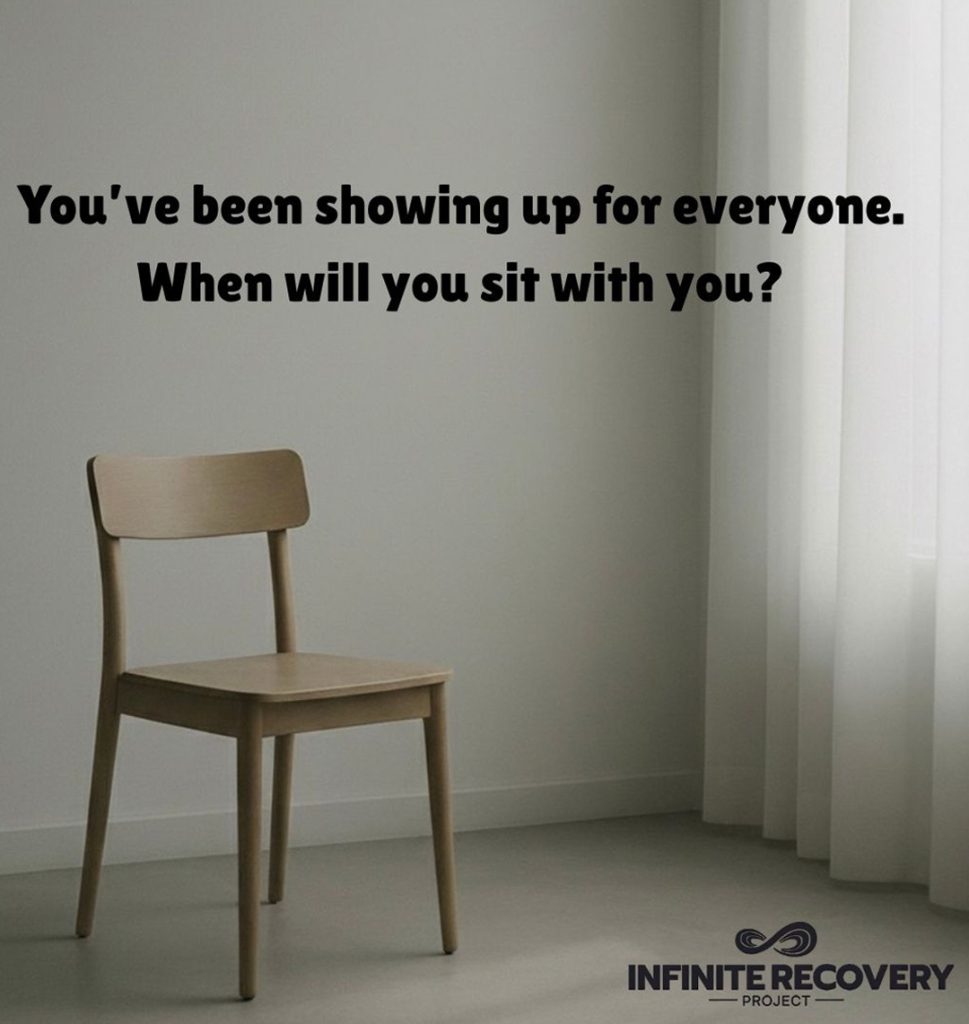
You’ve been showing up for everyone.

At work. At home. In friendships and family. You’ve listened, supported, and held space for others even when your own energy was fading. You’ve been strong, dependable, and endlessly available. But when was the last time you were on the receiving end of that same care? When was the last time you truly sat with yourself not to fix, not to analyse, but simply to be? We often confuse self-awareness with self- connection. Awareness happens in the mind understanding our patterns, naming our triggers, knowing our stories. But connection happens in the body in stillness, presence, and gentle attention. It’s where healing deepens into something quieter and more lasting: inner trust. You don’t need another plan for self-improvement. You don’t need to keep proving your worth through productivity or caretaking. Sometimes, what you need most is a moment of quiet a simple chair, a deep breath, a willingness to return to yourself. This is what emotional wellbeing truly looks like. It’s not about perfection or constant progress; it’s about relationship. A relationship with yourself that feels kind, honest, and safe enough to rest in. So if you’ve been showing up for everyone else lately, here’s a gentle reminder: You’re allowed to sit with you, too. You’re allowed to slow down, reconnect, and be fully present with the person you’ve been overlooking yourself. Because self-connection isn’t selfish. It’s the foundation of real balance, resilience, and peace of mind. Get the book: https://www.amazon.com/dp/1068323302  

Guidance, Professionals, Recovery

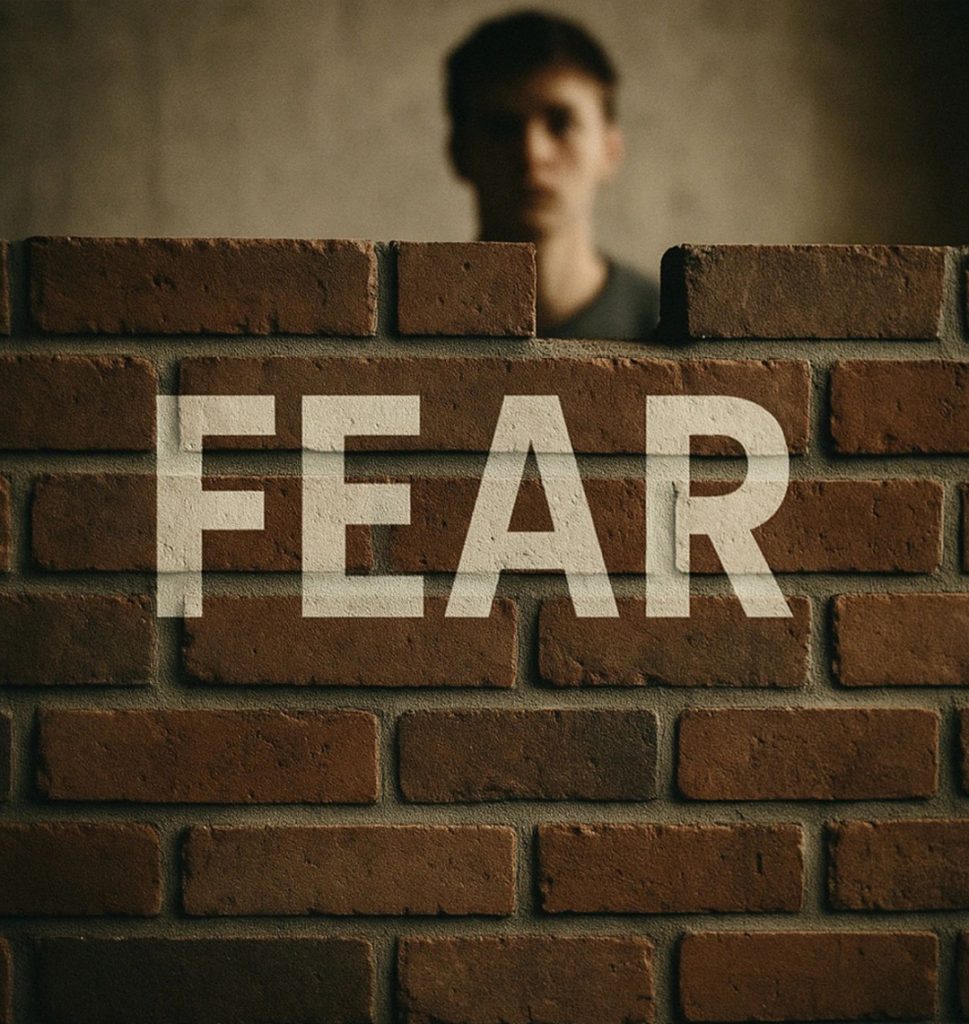
Are Your Professional Boundaries Just A Wall Built of Fear?

Every practitioner has been drilled on boundaries. – Maintain distance – Don’t share too much – Stick to the framework We treat boundaries like a sacred text, they are the hallmark of ethical, safe practice. They are supposed to protect the client. But for many, they’re not boundaries, they are walls. They are a psychological and emotional distance designed to protect the expert mask from vulnerability and intimacy. The Illusion of Clinical Safety The root of healing is relational. You cannot heal a relational wound with non-relational distance. When we overuse jargon, titles, and clinical protocols to maintain a rigid, hierarchical distance, we are not creating safety for the client. We are creating safety for ourselves. The ‘professional boundary’ often becomes the most sophisticated form of avoidance. It’s a trauma response, a freeze pattern – that says, ‘I cannot allow this person’s raw pain to touch my own unhealed material’ I must remain separate, controlled, and in charge. The boundary, intended as a protective tool, is actively killing the required vulnerability and coherence needed for the client’s system to finally soften and trust. The Addiction to Control Our addiction to rigid boundaries is merely an addiction to control. Control is the nervous system’s substitute for safety. A true relational process is messy, it’s spontaneous. It requires the therapist to sit in the vulnerability of not knowing and to be fully available to the client’s chaos. If your boundaries are so rigid that they prevent genuine, messy, human connection, then you are prioritising your own addiction to certainty over your client’s need for real, relational healing. You are treating the client as a case study to be managed, not a human being to be met. Boundaries of Integrity vs. Walls of Fear Boundaries of integrity are simple: they protect your capacity to serve and your basic human safety. They are fluid, responsive, and deeply respectful of the process. Walls of fear are rigid, they are built of jargon, distance, and emotional unavailability. They protect your unhealed material and your professional identity. You cannot teach a client to be vulnerable and safe if your own boundaries are actively rejecting the vulnerability required to connect. The hardest work is not defining the line. The hardest work is risking the softness. What is the one “professional boundary” you maintain not for ethical reasons, but to avoid feeling discomfort? were starting our series of 2.5hr workshops where we’ll be looking at this very thing, lmk if interested?   Get the book: https://www.amazon.com/dp/1068323302

Guidance, Professionals, Recovery

Do you ever feel as though your mind knows exactly what to do…

Do you ever feel as though your mind knows exactly what to do… but your body simply won’t follow? I’ve found myself in that place more times than I care to admit. The plan is clear. The next step is obvious. I even feel determined to move forwards. And yet, when the moment comes to take action… something in me just stalls. It’s as though the body quietly applies the brakes whilst the mind keeps pressing the accelerator. For a long time, I blamed it on a lack of discipline or motivation. I thought I simply needed to push harder, summon more willpower, become more focused. But what I’ve come to realise is that it often isn’t about mindset at all. It’s about the state of the nervous system. If the body still feels unsafe even in subtle, unconscious ways it hesitates. It holds back to protect you, even when you know the next step is the right one. That gap between thinking you’re ready and feeling ready enough to move is a powerful thing to notice. It changes how we approach growth, change, and even everyday decisions. Have you experienced that gap yourself the moment where your body’s pace doesn’t quite match your mind’s intention?   Get the book: https://www.amazon.com/dp/1068323302

£10 Million to Fix Addiction with Science
Guidance, Professionals, Recovery

£10 Million to Fix Addiction with Science. It’s a waste of Money

I read the news about the UK government’s £10 million investment to solve the addiction crisis with more research. They want smartphone-delivered treatments, and they want to study molecular mechanisms and neurobiological pathways. They are looking for the next genius protocol, they are doing exactly what trauma trained them to do – look for the complex answer in the wrong place. The Addiction to Complexity The entire addiction industry is addicted to complexity, the Government is investing £10 million to fund the Illusion of Arrival – the idea that one more breakthrough, one more piece of evidence, will finally grant the field certainty and control. But the complexity is the addiction. It allows us to ignore the single, simple truth that costs nothing – Trauma, not pathology, drives the crisis. You cannot find safety – the opposite of addiction, in a microscope or an algorithm. The problem isn’t a lack of data. It’s a lack of courage to act on the data we already have (ACE Study for example). The Shame of the Simple Answer The solution doesn’t require a £10 million fellowship, it requires a willingness to be present. It requires practitioners to set down the expert mask, acknowledge their own unhealed material, and offer unconditional relational safety. This answer is free, simple, and non-scalable. It threatens the entire, elaborate entrepreneurial trauma trap (the high-cost, high-jargon industry). The money is being invested in finding the new, billable solution that keeps the machine turning, and it’s a huge, public avoidance of the one thing that will actually save lives, connection without motive. – Society for the Study of Addiction The Real Crisis is Relational The £10 million isn’t a tragedy because the intention is bad. It’s a tragedy because it reinforces the deepest lie in recovery, that the solution is external, complicated, and requires a high price tag. The research will deliver more data, the algorithms will deliver more personalised treatment plans, and the revolving door of relapse will keep spinning. Because you cannot code safety into an app. You only find safety in the simple, terrifying, unbillable presence of another human being. – Department for Science, Innovation and Technology If you had £10 million to solve the crisis with a simple, free solution, where would you put the money? Apparently they will look in every corner of the UK!… !! Well I have a solution.   Get the book: https://www.amazon.com/dp/1068323302

Guidance, Professionals, Recovery

When Did You Outgrow the Story You Once Lived By?

Most of us don’t realise how much of our life is shaped by a story. Not the story we tell others. The story we quietly repeat to ourselves. A story we picked up in childhood… A story written during a season of survival… A story that once protected us but eventually began to limit us. For years, I lived by mine. I told myself: “This is just who I am. This is how my life will always be.” It felt permanent. It felt like the truth. But it wasn’t. At some point, I realised it was just a story — a story I had outgrown.   That realisation didn’t arrive in a single breakthrough moment. It came quietly. In the way I began to speak differently about myself. In the boundaries I started to set. In the way I stopped defending the old version of me. Looking back, I wonder how many of us are still living in stories that no longer fit stories written by past pain, old circumstances, or other people’s expectations. Perhaps real transformation doesn’t begin with a dramatic external change, but with a simple inner question: “Does this story still serve the person I am becoming?” I’d love to hear your perspective: When did you realise you had outgrown the story you once lived by?   Get the book: https://www.amazon.com/dp/1068323302

Scroll to Top