

What We Tell Vulnerable People When They’re Desperate for an Answer
Imagine meeting someone at one of the most frightened, confused and desperate moments of their life
They can’t stop drinking
They can’t stop using
Their family may be falling apart
They may have lost their job, their home, their relationships or any sense of who they are
They want one thing
An answer!
And desperate people will often believe answers they would question under different circumstances
So what do we tell them?
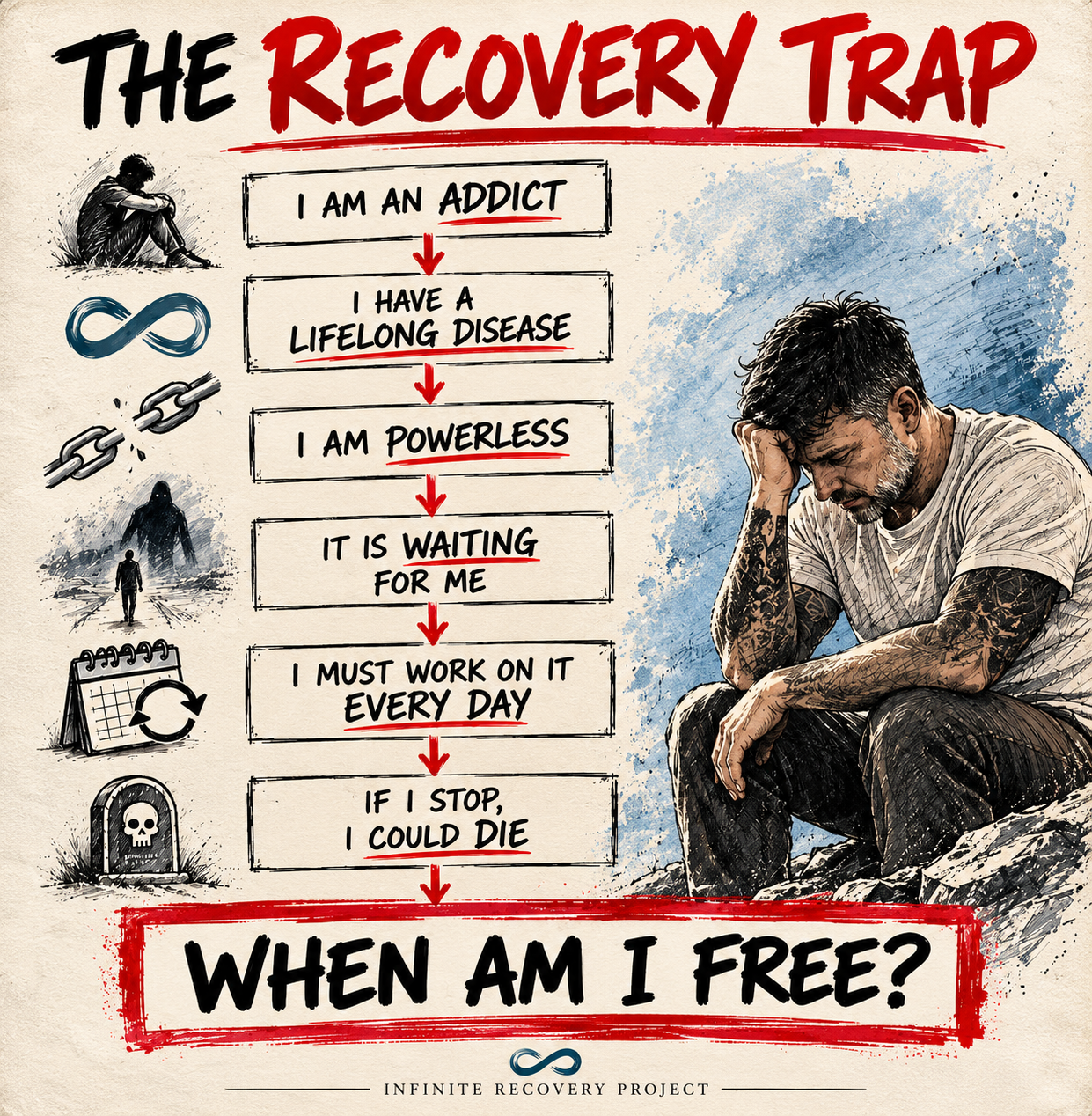
“You are an addict”
“You have a lifelong disease”
“You are powerless”
“You’ll always have this”
“It’s waiting for you”
“You need to work on your recovery every day”
“If you stop doing what keeps you well, you could relapse”
“You could die”
Then something extraordinary happens (or not)
The person gets better
They stop using
Their life changes
Five years pass
Ten years.
Twenty years
Thirty years
And we are still be asking them to understand themselves through the explanation they were given during one of the most vulnerable periods of their life
I spent 22 years inside that understanding
So I’m not mocking it
I’m asking whether we appreciate the responsibility involved in giving somebody an identity and an explanation of themselves when they are desperate enough to accept almost anything that offers hope
Because some of these statements aren’t neutral facts
They are beliefs about what addiction is, what the person is, what their future holds and what they will need for the rest of their life
And beliefs have consequences!!
Tell someone repeatedly that something dangerous lives inside them and they may spend their life watching for it
Tell someone they are powerless and they may interpret struggle as evidence of powerlessness
Tell someone recovery must be maintained forever and stopping can become frightening
Tell someone relapse proves the disease is still there and relapse becomes confirmation
Tell someone continued recovery prevents relapse and every year of abstinence becomes confirmation too
Eventually almost anything that happens can prove the original explanation correct
That’s the part I think we need to become much more uncomfortable about
Because vulnerable people deserve help!
They deserve safety!
They deserve compassion!
They deserve somewhere to belong!
They also deserve intellectual humility from the people helping them!
Maybe the most ethical thing we can sometimes say is
I don’t know exactly what’s happening to you yet
But I don’t believe you are broken
And I’m not going to tell you who you are or what you will need for the rest of your life before we’ve even discovered what this has meant in yours
Help someone through their darkest moment
But be very careful about giving them a lifelong identity while they’re there
They might still be carrying it 30 years after the crisis has gone!