

Why addiction treatment looks like progress… but isn’t
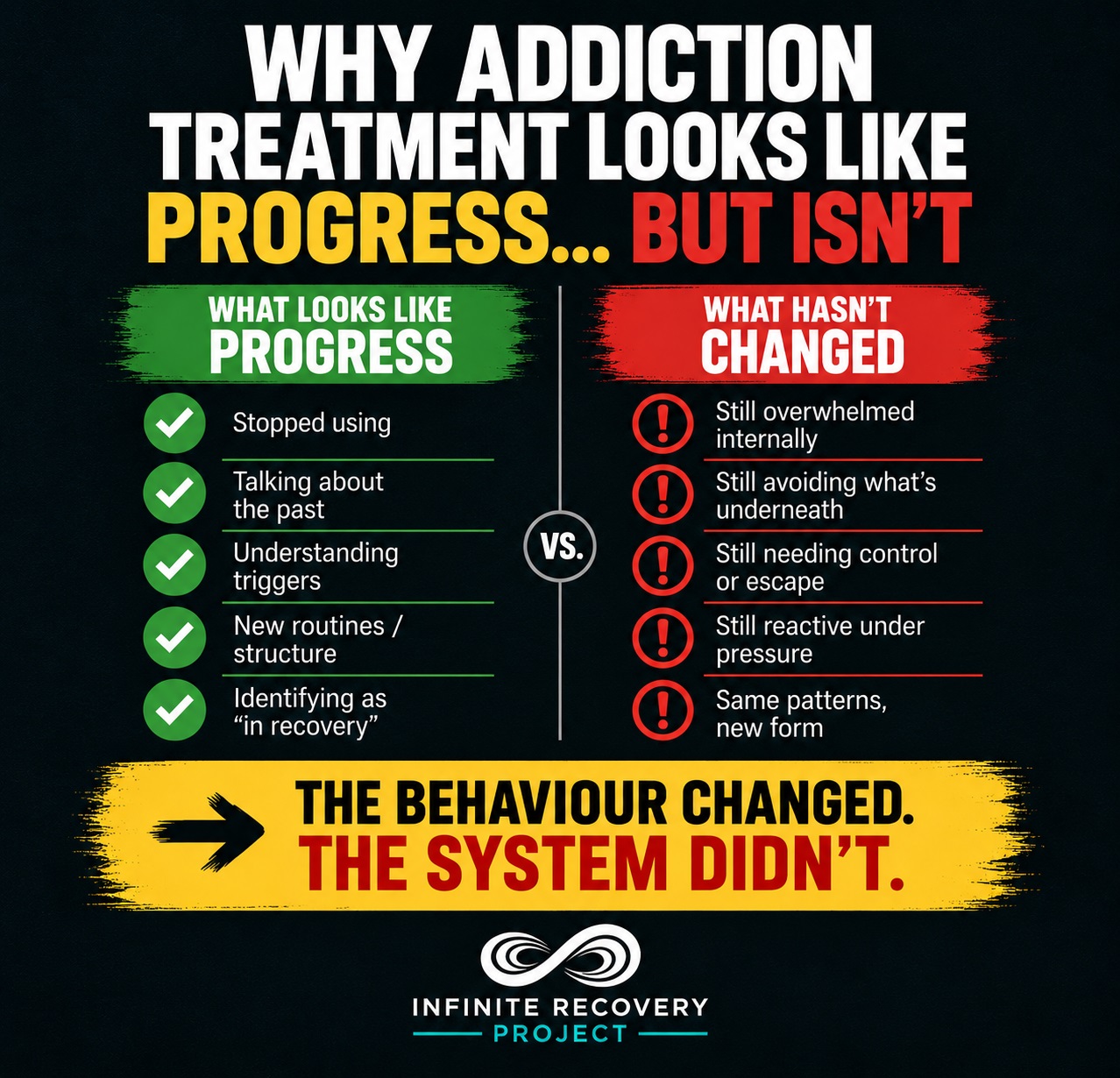
On the surface, things can look like they’re working
Someone stops using
– They can talk about their past.
– They understand their triggers.
– They build structure around their life
– These are meaningful shifts
But they don’t necessarily mean the underlying system has changed
What often remains is less visible
– The same internal pressure
– The same need for relief
– The same reactivity under stress
The same patterns are expressed in different ways
So the behaviour changes…but the function it served does not
This gap is reflected in the clinical literature also
Outcomes are often measured through observable markers such as abstinence and engagement. While important, these do not reliably indicate whether underlying patterns have shifted
Relapse rates for substance use disorders remain high (from McLellan et al., 2000; To Volkow et al., 2016 and on), suggesting that behavioural change alone does not resolve the drivers of the behaviour
From a learning perspective, behaviours that reduce distress are negatively reinforced, making them more likely to return if the underlying state remains unchanged
Addiction, in this sense, is not random, it is an intelligent adaptive response to internal states that feel overwhelming or unmanageable
If those states are not met differently, the system continues to seek regulation
This isn’t a criticism of individuals or effort, it reflects a limitation in how progress is often defined
When the focus stays on behaviour, without addressing what made that behaviour necessary, change can remain surface-level
It looks like progress, but underneath, the same pattern can still be running
the behaviour changed
….the system didn’t