

WHY DO WE ONLY SPEAK WHEN WE DISAGREE?
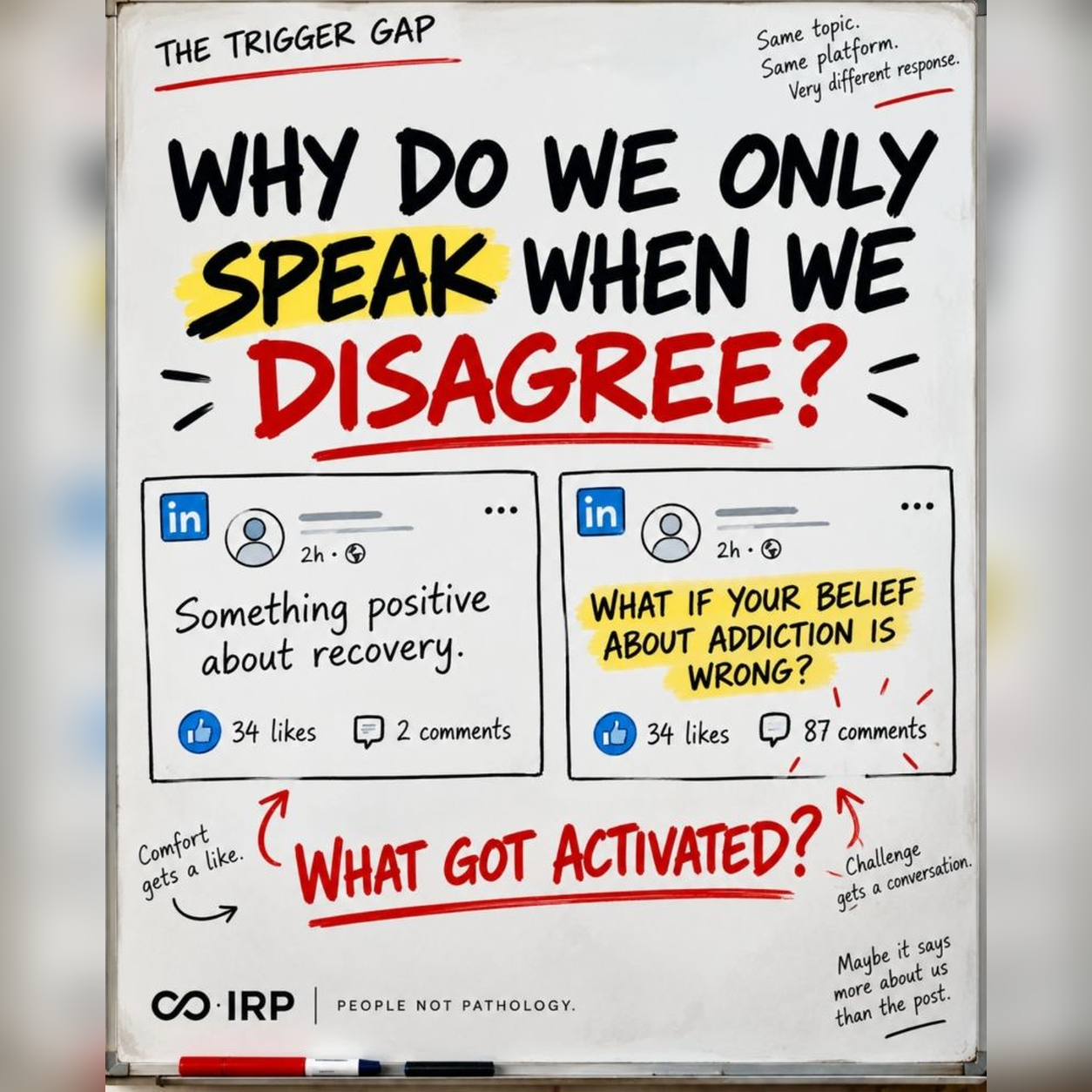
I’ve noticed something interesting here lately
If I post something encouraging, something most people broadly agree with, people read it, maybe like it, and move on
But question a deeply held belief about addiction or recovery and suddenly everyone has something to say
“I’ve been sober 35 years…”
“I’ve worked in this field for 20 years…”
“Addiction is a disease…”
“The 12 Steps saved my life…”
“Trauma is the root…”
And I’m genuinely fascinated by that
Why does disagreement create such a powerful need to respond?
Maybe it’s because some of these ideas aren’t simply ideas anymore.
They’ve become part of who we are
Our recovery story
Our professional training
Our community
Our explanation for what happened to us
Sometimes even our purpose
So when someone questions the explanation, perhaps it doesn’t always feel like they’re questioning an idea
It can feel like they’re questioning us
And then something interesting happens
We stop being curious about what the other person is saying and start gathering evidence for what we already know
We defend
We explain
We correct
We tell our story as proof
I’ve done it too
But what if the moment we feel most compelled to defend an idea is precisely the moment worth becoming curious about our relationship with it?
Not because the idea is wrong
But because truth shouldn’t need our identity to protect it
So here’s tomorrow’s question:
What belief about addiction or recovery would be hardest for you to discover wasn’t true?
And perhaps even more importantly:
Why that one?