

HOW MUCH OF YOUR THERAPY IS ACTUALLY ABOUT YOU?
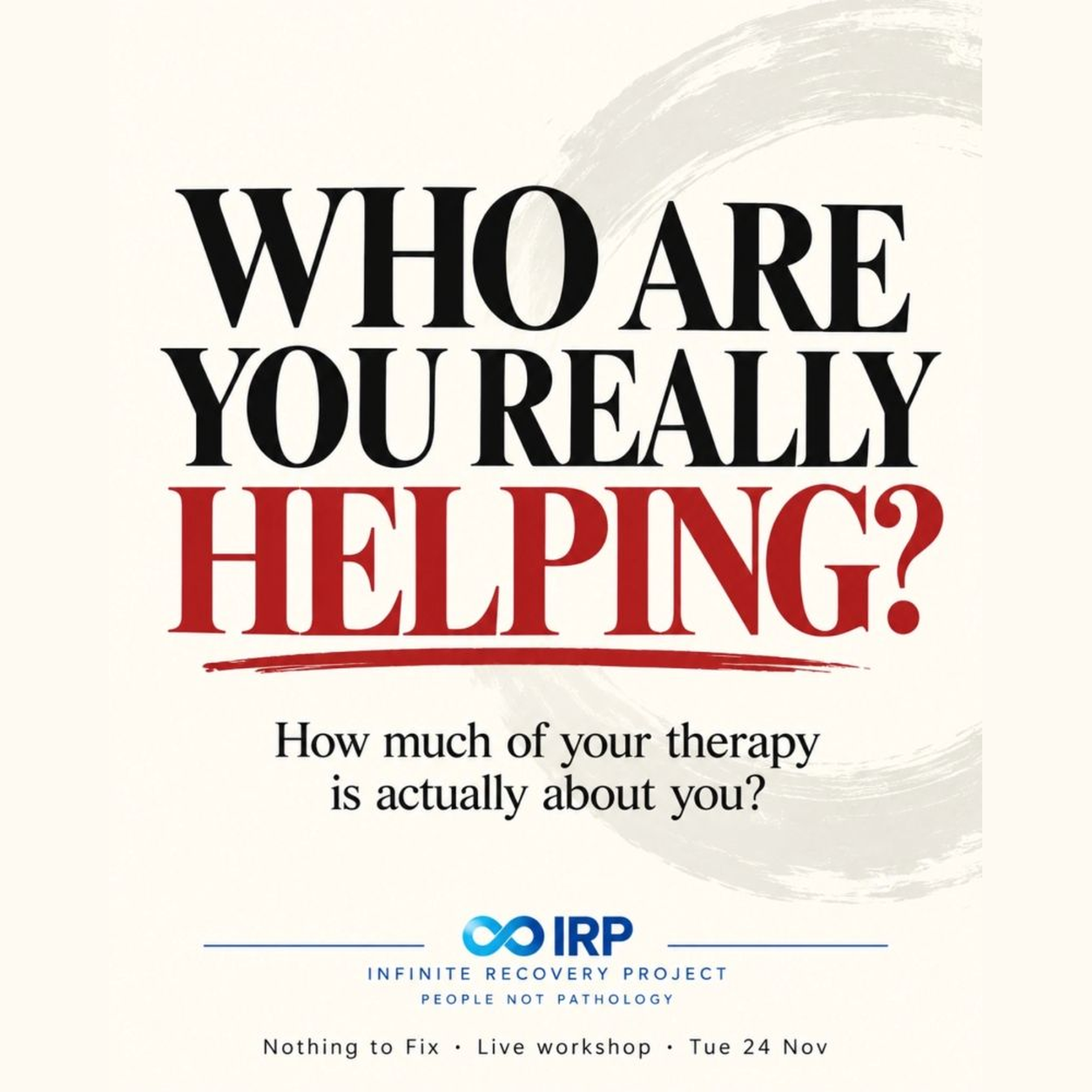
It’s an uncomfortable question for anyone who has dedicated their life to helping others
You sit with someone who is suffering. You listen, you care, you want to understand, and naturally, you want to help
But what happens inside you when you can’t?
When the client doesn’t improve
When they reject your understanding. When they continue making choices you believe are harmful. When months of work seem to lead nowhere
Do you become curious?
Or does something in you begin to feel threatened?
Perhaps you question your competence. Perhaps you work harder, search for another intervention, or begin to see the client as resistant
These are understandable human responses
But there’s something much deeper worth examining
At some point in your life, you developed an idea of who you are
Perhaps you’re the caring one. The person who understands. The person who helps others find their way
And over time, that idea became part of your identity
Now, without necessarily realising it, your client’s progress can become evidence that you are who you believe yourself to be
Their struggle can become a threat to that same identity
This is where I think genuine self-inquiry becomes so important
Because the self we’re trying to protect is often little more than a collection of thoughts, memories and beliefs about who we are
And we can spend an extraordinary amount of energy defending that identity without ever noticing we’re doing it
Even in the therapy room
We might call it professionalism, responsibility, commitment or care
And sometimes it is
But can we recognise when our own need to be helpful has quietly entered the relationship?
Can we notice the discomfort of not knowing, of being ineffective, of having nothing to offer, without immediately trying to escape it?
Perhaps the deepest work a therapist can do is to become aware of the person they believe themselves to be, and how that identity shapes every encounter
Because when we no longer need another person’s progress to tell us something about ourselves, something changes
There may be more room to meet them
Without an agenda to fulfil
Without an identity to protect
Without needing the encounter to make us somebody
Just two human beings, meeting in the unknown