

THE CHILD WHO FELT INVISIBLE
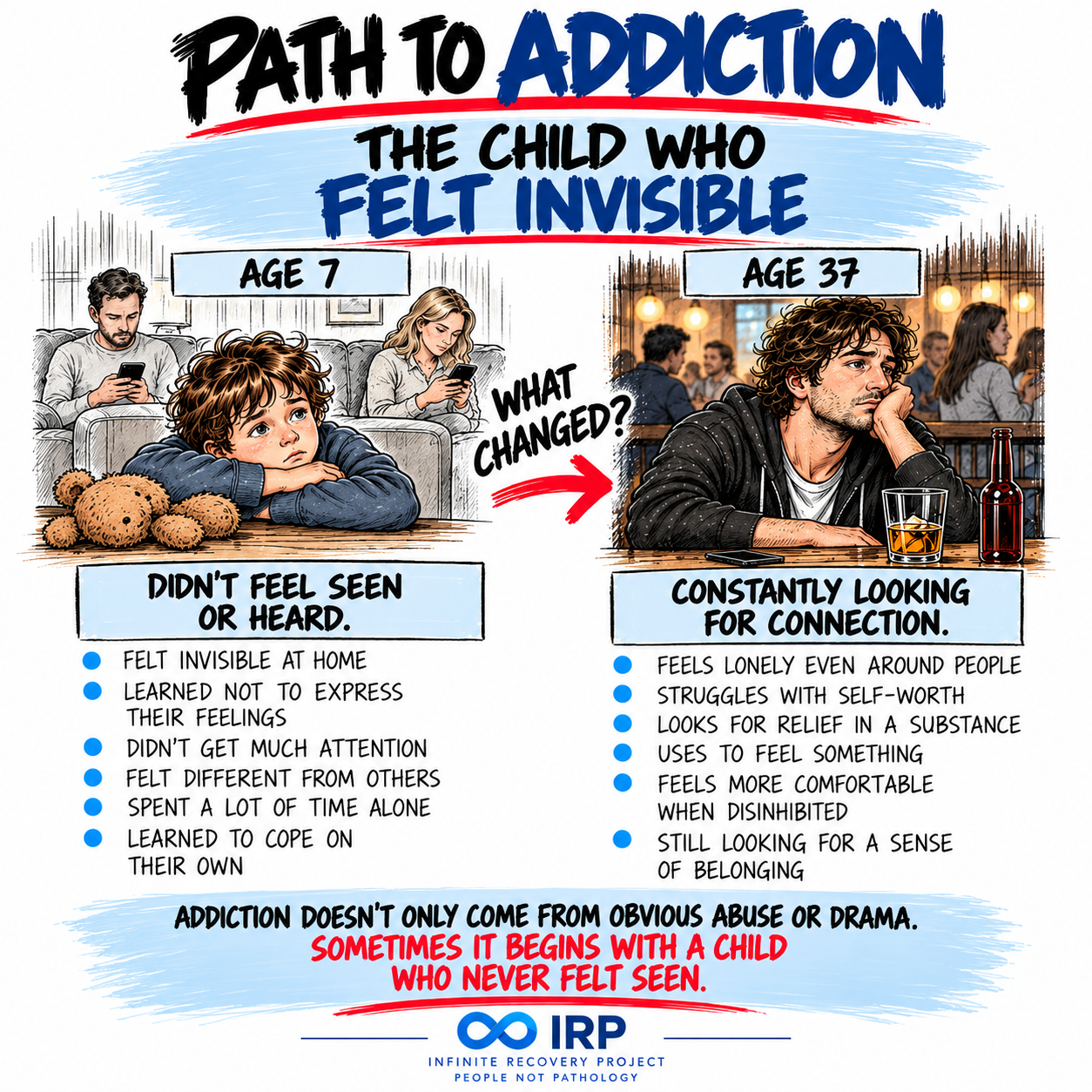
Imagine growing up in a home where nobody really notices how you’re feeling
Your parents might be good people. They might love you enormously
They work hard, provide for you, make sure you’ve got everything you need
But somehow, you don’t feel seen
Perhaps they’re always busy
Perhaps they’re dealing with their own difficulties
Or maybe they simply don’t know how to connect with you emotionally.
You try to tell them something important, but they’re distracted
You get upset, and nobody seems to notice
Eventually, you stop trying
And somewhere along the way, you learn that your feelings don’t really matter
You become comfortable spending time alone
You stop expecting people to understand you
You learn to manage whatever you’re experiencing without involving anyone else
And from the outside, everything looks fine
Now imagine that child at 37
They have friends. Perhaps a partner, children, a successful career
Yet there’s a loneliness they can’t quite explain
They can be surrounded by people and still feel completely disconnected
They struggle to let people get close
They want connection, but something about being vulnerable feels uncomfortable
Then they discover alcohol
And suddenly, something changes
They feel more relaxed around people
They can talk more freely
They stop worrying about whether they’re interesting enough or whether anyone really likes them
For a few hours, the loneliness seems to disappear
Imagine how compelling that experience could become for someone who has spent much of their life feeling invisible
Years later, when drinking has become a serious problem, people focus on the alcohol
How much they’re drinking
What it’s doing to their health
Why they can’t just stop
And those concerns are understandable
But I wonder how often anyone asks what drinking actually changes for that person
What becomes possible when they’ve had a few drinks?
What disappears?
What do they experience that seems so difficult to find without it?
Of course, not everyone who feels unseen as a child develops an addiction. And addiction has many possible pathways!
But perhaps there’s something important here
What if the substance became a way of experiencing the connection they’d been looking for long before they ever started using it?
And what might we discover if we became curious about that?
Infinite Recovery Project | People Not Pathology