

You Can Become An Expert on Your Suffering and still be Suffering
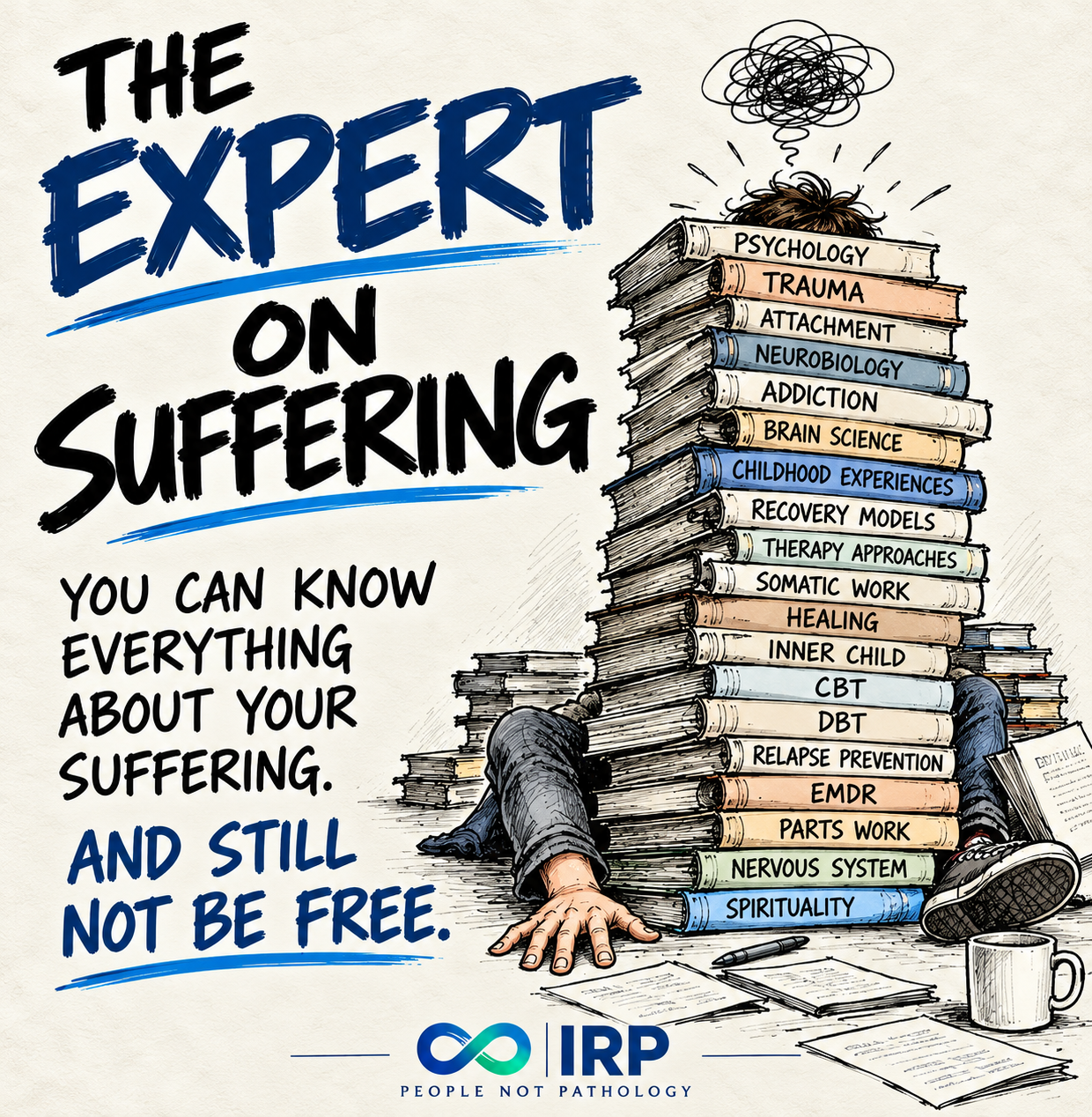
You can understand your childhood
Know your attachment style
Recognise your trauma responses
Explain your nervous system
Identify every pattern you’ve ever repeated
And still experience life exactly as you did before
We’ve become remarkably good at explaining human suffering
But I’m increasingly interested in something else
What happens when the very explanations we use to understand ourselves become the things we defend most fiercely?
Someone can spend 30 years in 12-Step recovery, learn the literature inside out, and argue about its principles until the end of time
But what if the intensity with which they defend those beliefs is itself worth becoming curious about?
Not because the programme is wrong
Not because their recovery isn’t genuine
But because something that once offered safety, belonging and certainty can become so closely tied to our identity that questioning it feels threatening
And the same is true of professionals
A therapist can spend years studying trauma, nervous system regulation and psychological defences
They can recognise a trauma response in someone else almost immediately
Yet when their own understanding is questioned, they may become defensive, dismissive or desperate to establish that they’re right
Knowing what a trauma response is doesn’t mean we recognise one when it’s happening in ourselves
And being able to explain a psychological defence doesn’t necessarily mean we’re free from it
I’m not suggesting every disagreement is a trauma response. Sometimes people simply disagree, and sometimes they have very good reasons
But surely there’s something worth examining when our knowledge becomes something we must protect rather than something we’re willing to question
This is where I think we confuse information with transformation
We can become incredibly sophisticated at explaining ourselves without fundamentally changing our relationship with our own experience
We can learn the language of healing while continuing to live through the very patterns we’re describing
And perhaps the most uncomfortable possibility is that our commitment to understanding ourselves has sometimes become another way of avoiding what is actually happening
I’m not against knowledge, therapy, recovery programmes or psychological understanding
I’m questioning whether any of these necessarily bring about the freedom we assume they do
Because knowing why you suffer and no longer being compelled to suffer in the same way are two very different things
And perhaps genuine inquiry begins when we’re willing to question not only what we believe abour ourseleves, but the part of us that needs those beliefs to be true