

The “disorder” is the system’s best attempt at survival
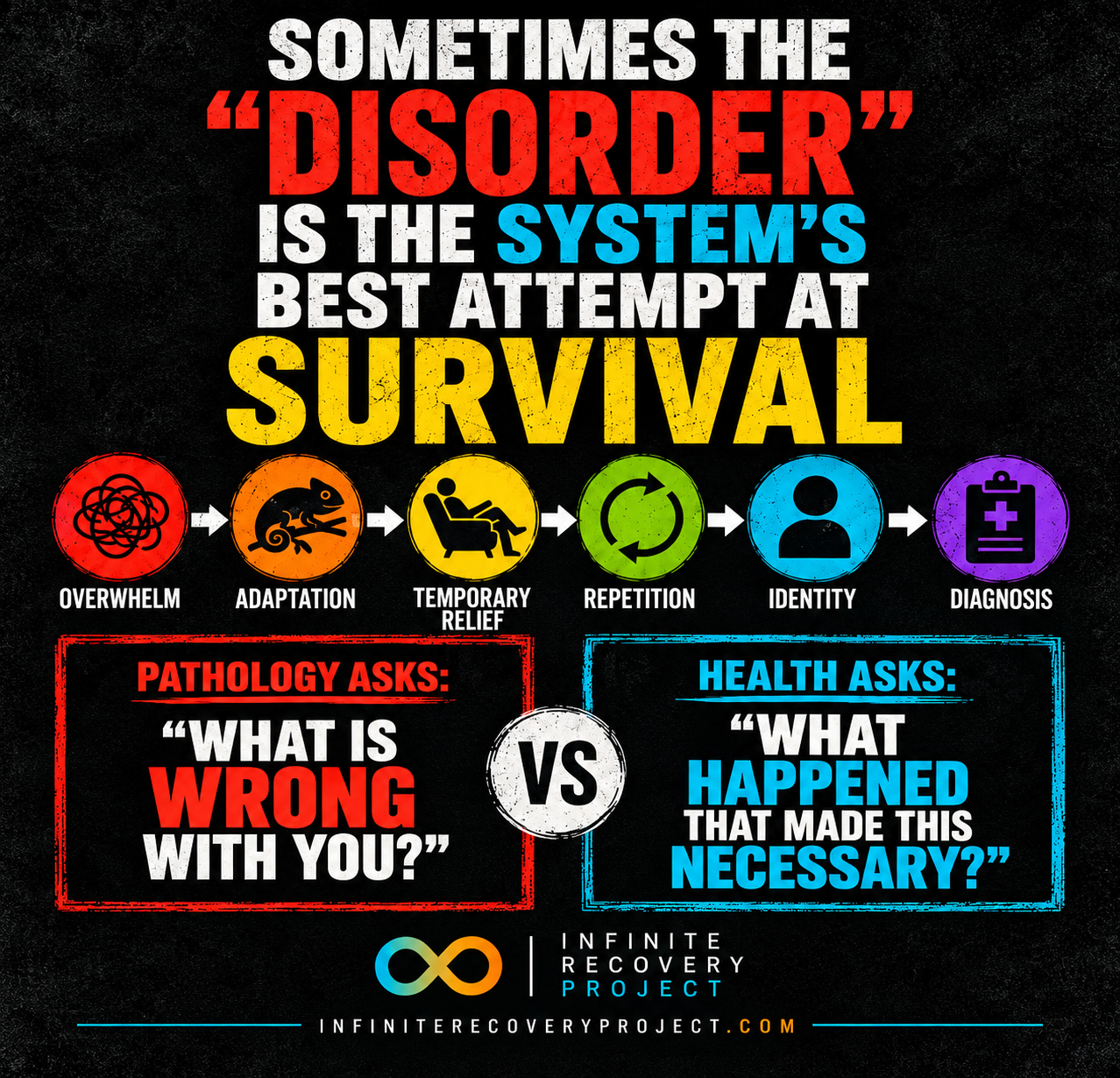
That sentence can sound provocative until you really slow down and look at human behaviour honestly
A child grows up in an environment that feels unsafe, overwhelming, emotionally unpredictable, rejecting, or disconnected. The nervous system adapts around those conditions because it has to
Not because the child is broken
Because the human system is intelligent
Years later, those adaptations may no longer look helpful. The person may become emotionally shut down, hypervigilant, reactive, perfectionistic, self-destructive, or addicted to behaviours that temporarily relieve internal pressure
Eventually something creates relief
Alcohol quiets the noise
Food comforts
Work distracts
Porn numbs
Gambling creates escape
Control creates temporary safety
And the body remembers
Not morally, but biologically
The system learns
This helps me survive what I’m carrying
That is why addiction makes more sense when we stop seeing it as random pathology and start understanding it as intelligent biological adaptation
Research across trauma, attachment, and neuroscience increasingly supports the understanding that chronic stress and relational environments shape the nervous system, emotional regulation, behaviour, and long-term coping patterns (Felitti et al., 1998; Schore, 2003)
This does not remove responsibility or consequences, but, It changes where we begin!
Because if we only ask
What is wrong with this person?
we can completely miss the intelligence inside the behaviour itself
The same unresolved wound can later appear as anxiety, depression, addiction, rage, perfectionism, burnout, emotional collapse, or relationship chaos
Different expressions of the same human system trying to survive in the only ways it learned how
That changes the conversation from blame and symptom management toward deeper understanding…
Not
How do we control the behaviour?
But
What happened that made this adaptation necessary in the first place?
——–
This simple understanding of adaptive intelligence begins to remove stigma because people no longer feel seen as defective underneath, but understood as human beings whose systems adapted intelligently to pain, overwhelm, disconnection, or survival. That changes the entire relational environment around healing. Shame softens, defence softens, people feel safer to tell the truth, safer to be seen, and safer to explore what is actually happening underneath the behaviour. From that place, recovery stops becoming a lifelong fight against yourself and starts becoming a process of reconnection, safety, honesty, increased capacity, and genuine healing at depth.