

Whoisthisfor/people-suffering-addiction
Dysregulation
What It Really Is (and Isn’t)
The word ‘dysregulated’ gets thrown around a lot – especially in healing spaces, but most people using the term don’t actually understand what it means. Dysregulation isn’t a flaw, or a mental health label, it’s not proof that something’s wrong with you.
It’s a signal, a language, a brilliant, embodied response to experiences that were never processed.
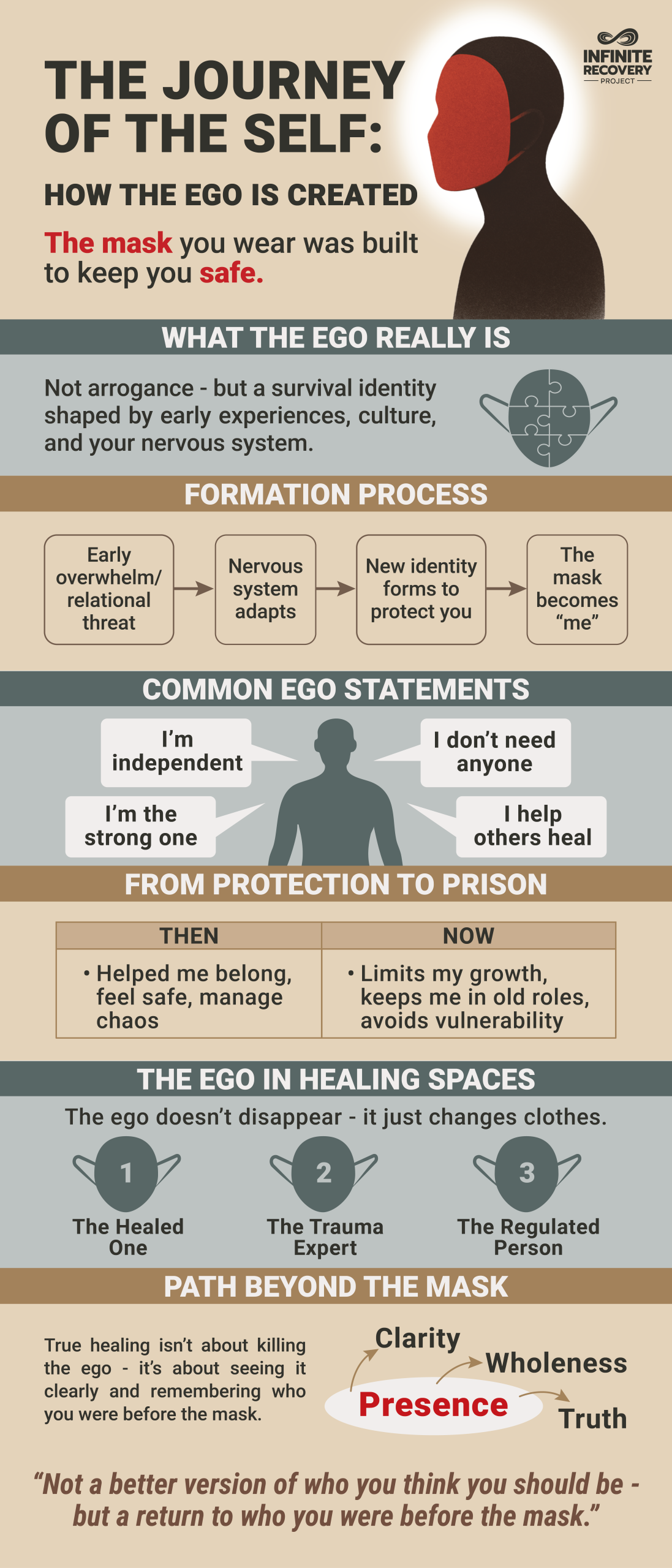
When you were five years old, overwhelmed and alone, your nervous system did what it needed to do to survive, it held the intensity for you, it froze, it fled, it fought, it collapsed. And because no one helped you come back, that pattern stayed.
So now, as an adult:
- You might shut down when you get close to someone.
- You might explode in moments that don’t make sense.
- You might feel numb, then ashamed for feeling nothing.
- You might leave your body altogether and call it regulation
None of this is dysfunction, it’s the brilliance of your system trying to protect you from what it still believes is life-threatening, dysregulation isn’t the enemy, it’s a doorway.
Most trauma-informed approaches try to manage dysregulation – instead of meeting it.
They offer grounding techniques, breathing methods, cognitive tools – all helpful in a moment of crisis…
But none of that teaches you how to be with what you’ve been avoiding your whole life, real regulation isn’t learned from a handout, it’s rediscovered, remembered, as you slowly come home to your body in the moment, as it happens.
The nervous system doesn’t need to be fixed, it needs to be listened to.
And that’s not a quick process.
It’s a slow, sacred unravelling of everything you thought was wrong with you – until you realise it was never you, it was what happened to you. And that changes everything, how we see ourselves, how we see others, and what we call healing.

What's Possible?
This process isn’t about being “stronger” or “more disciplined.”
It’s about seeing clearly.
When you understand yourself, your behaviours naturally change. When you see where your suffering comes from, it starts to dissolve – not because you forced it to, but because it was an innocent protection mechanism to help you escape trauma response.
During this process what you'll experience:
- A mind that is quieter - not through force, but through understanding
- Less fear and resistance - because you’re no longer fighting yourself
- A sense of peace and clarity - even in difficult moments
- A natural shift in lingering compulsions - without needing constant willpower
- A recovery that doesn’t feel like effort - but freedom
This is not about:
- Forcing yourself to stay clean
- Following steps, rules, or techniques
- Constantly managing cravings and triggers
- “Working” on yourself forever
If you’re tired of trying to fix yourself, and something in this speaks to you, let’s start the conversation.
Next Steps: How to Get Involved
Option 1: Reach Out Directly
If you feel drawn to this process, the simplest way to begin is to reach out. Send a message, share what’s on your mind, and we can start a conversation about where you are now and what you’re hoping for.
Option 2: Start With the Book
Amazon.com
Contact Us
This journey isn’t for everyone. But if it’s for you, you already know. I’ll see you inside.
Final Thought
“You can’t see what’s possible until you wake up to it. Until then, your only dream is to stop suffering. And that’s okay. But know this: life is waiting for you beyond that dream. All you have to do is look.”